


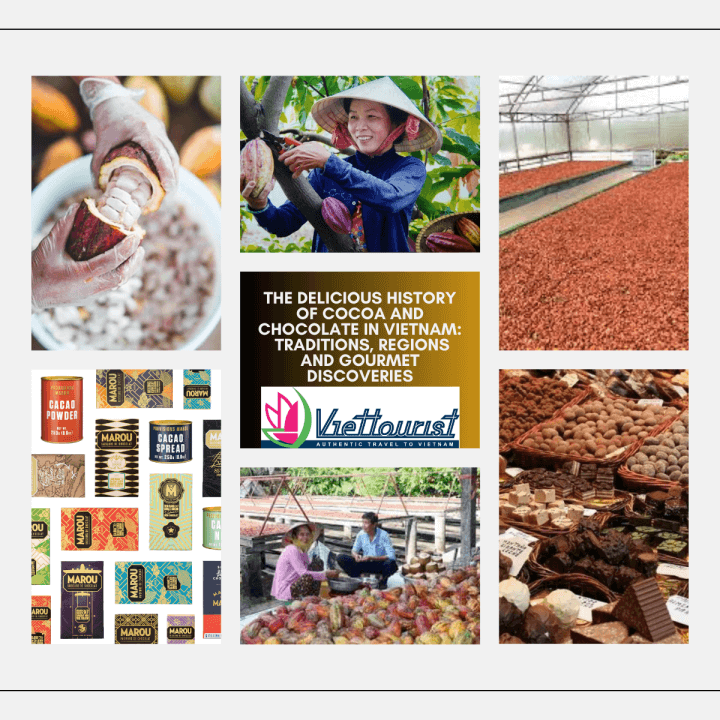
The Roots of Cocoa in Vietnam
Cocoa in Vietnam is relatively new compared to other agricultural crops, but it has quickly gained popularity thanks to the exceptional quality of its beans and the global craze for chocolate.
The Beginnings of Cocoa
Cocoa cultivation in Vietnam began in earnest in the 1980s, thanks to the combined efforts of the Vietnamese government and international organizations seeking to diversify agricultural crops. The first trials took place in the southern provinces, where climatic conditions and soils proved to be suitable for cocoa cultivation.
Key Cocoa Regions
Vietnamese cocoa is mainly grown in the southern regions, where the tropical climate and fertile soils provide ideal conditions for this delicate crop.
Ben Tre – The Heart of the Mekong Delta
Ben Tre, in the heart of the Mekong Delta, is a leading region for cocoa cultivation. With its rich alluvial soils and humid climate, Ben Tre produces high-quality cocoa beans, which are prized for their complex aromas and high cocoa butter content. In 2023, the region produced about 1,500 tons of cocoa.
Dak Lak – The Fertile Highlands
Located in the Central Highlands, Dak Lak is another key region for Vietnamese cocoa. The province enjoys a temperate climate and fertile volcanic soils, perfect for cocoa cultivation. Dak Lak is known for its cocoa beans with a rich taste and fruity notes. The annual production of cocoa in this region is about 1,200 tons.
Ba Ria-Vung Tau – The Chocolate Coast
Ba Ria-Vung Tau, with its coastal climate and well-drained soils, is also an important area for cocoa farming. This region produces cocoa beans that are distinguished by their mild taste and floral aromas. In 2023, Ba Ria-Vung Tau produced about 800 tons of cocoa.
The Magic of Transformation: From Cocoa to Chocolate
The process of transforming cocoa into chocolate is a true alchemy, combining traditional know-how and modern innovations.
Fermentation and Drying
After harvesting, the cocoa beans are fermented for several days to develop their aromas. This crucial step transforms natural sugars into complex aromatic compounds. The beans are then dried in the sun, which helps stabilize the aromas and prepare the beans for roasting.
Roasting and Conching
The dried cocoa beans are then roasted to intensify their aromas. This step is followed by the grinding of the beans to obtain a cocoa paste. Conching, a long and delicate kneading process, further refines the flavors and ensures a smooth, creamy texture to the chocolate.
Moulding and Refining
Finally, the cocoa mass is tempered, molded and cooled to create chocolate bars ready to be enjoyed. Some Vietnamese chocolatiers add local ingredients like black pepper, coconut, or green tea to create unique and flavorful variations.
The Jewels of Vietnamese Artisanal Chocolate
Vietnam is now known for its artisan chocolatiers, who combine traditional techniques with a touch of local creativity.
Marou – The Pioneers of Bean-to-Bar Chocolate
Marou is arguably the most famous chocolate brand in Vietnam. Founded by two French expatriates, Marou specializes in bean-to-bar chocolate, i.e. from grain to bar. Each cocoa-producing region is highlighted with special editions, allowing consumers to experience the unique flavors of each terroir. Marou’s success put Vietnamese chocolate on the global map.
Maison Marou – A sensory experience
Maison Marou in Saigon offers visitors an immersive experience in the world of chocolate. Here you can learn about the chocolate-making process, take part in tasting workshops and enjoy unique chocolate creations. It is a must-see stop for any chocolate lover visiting Vietnam.
The Tourist Aspect: Journey to the Land of Cocoa
Cocoa and chocolate offer a new dimension to tourism in Vietnam, attracting visitors looking for unique gastronomic experiences.
The Plantation Towers
The cocoa plantations in Ben Tre, Dak Lak and Ba Ria-Vung Tau open their doors to visitors, offering guided tours that immerse you in the world of cocoa. You can observe the cultivation methods, participate in the harvesting of the beans and discover the secrets of fermentation and drying. These tours are a great opportunity to learn more about cocoa farming while enjoying the beautiful scenery.
The Chocolate Workshops
For those who want to get their hands dirty, many chocolatiers hold workshops where you can learn how to make your own chocolate. From roasting beans to creating custom bars, these workshops offer a hands-on and delicious experience. In Saigon, Maison Marou offers workshops for adults and children, making this activity a fun and educational moment for the whole family.
Chocolate Festivals
Chocolate festivals are starting to gain popularity in Vietnam, celebrating this delicacy through cultural events, cooking demonstrations and tastings. These festivals are the perfect opportunity to discover the creations of local chocolatiers, attend chocolate sculpture competitions and participate in interactive workshops.
Key Figures and Production
The cocoa sector in Vietnam is booming, with production constantly growing.
Production in 2023
- Ben Tre : 1,500 tons
- Dak Lak : 1,200 tons
- Ba Ria-Vung Tau : 800 tons
The total cocoa production in Vietnam in 2023 stands at around 5,000 tons, with much of this production exported to international markets. Vietnamese cocoa is particularly prized for its exceptional quality and unique aromas, making Vietnam an increasingly important player in the global cocoa and chocolate scene.
Conclusion
Cocoa and chocolate in Vietnam are not only delicious products, but they are also a reflection of a rich and diverse culture, combining ancestral traditions and modern innovations. Whether you’re a chocolate lover or just curious to learn more about this delicious adventure, Vietnam offers you a wealth of experiences to enjoy.
So, the next time you enjoy a Vietnamese chocolate bar, think of those verdant plantations, passionate artisans, and captivating stories behind each piece. Vietnam is not only a destination for nature and history lovers, it is also a paradise for foodies.
Thank you for accompanying me on this chocolate journey. Feel free to share your experiences and discoveries when it comes to cocoa and chocolate in the comments. If you want to visit Vietnam and discover a culinary tour, contact Viettourist for more information! See you soon in Vietnam!


