


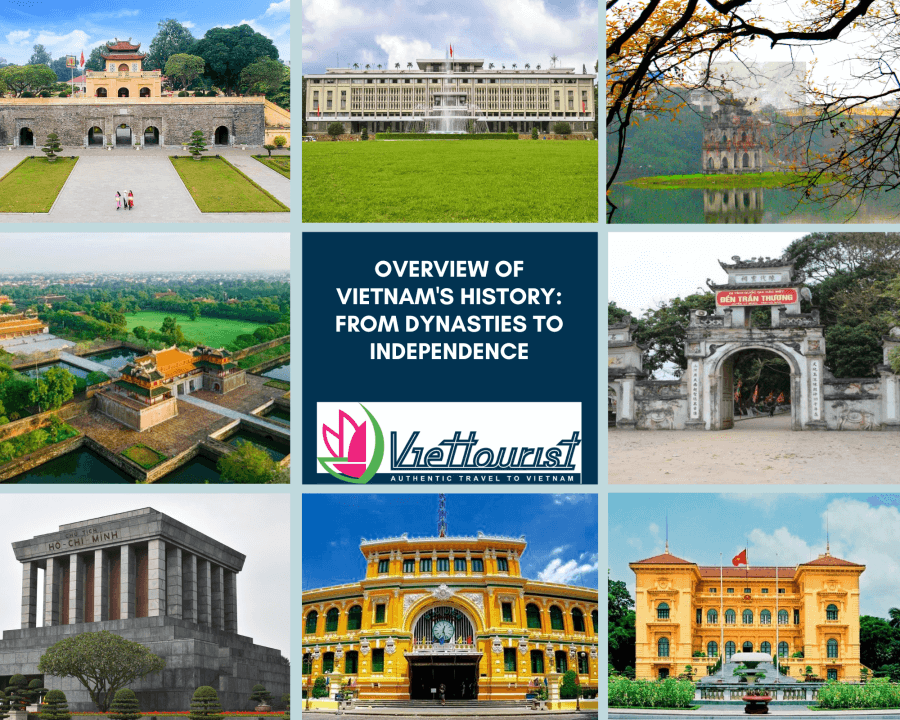
Vietnam is a country with a rich and fascinating past, steeped in thousand-year-old traditions and significant historical events. From ancient dynasties to modern independence, this journey through time reveals the vibrant soul of this land. Let’s discover together this fascinating history and the must-see places that bear witness to it.
The Ancient Dynasties: The Roots of Vietnamese Civilization
The history of Vietnam begins more than 4,000 years ago, with the legendary Hung King dynasty. These early rulers are considered the founders of the Vietnamese nation. Their reigns saw the emergence of the first Vietnamese cultures and traditions, some of which still endure today.
Place to visit: Temple of the Hùng Kings
Located in Phú Thọ province, the Temple of the Hùng Kings is a sacred site where Vietnamese people come to pay their respects to their ancestors. It is a place steeped in spirituality and respect for the country’s origins.
The Ly Dynasty (1010-1225) and the Birth of Thang Long
The Ly dynasty marked the beginning of an era of prosperity and cultural development. In 1010, King Ly Thai To decided to move the capital to Thang Long (present-day Hanoi), ushering in a period of stability and economic boom.
Location: Thang Long Imperial Citadel
A UNESCO World Heritage Site, the Thang Long Citadel is a fascinating testament to this flourishing era. Visitors can explore the archaeological remains and learn about Hanoi’s ancient history.
The Tran Dynasty (1225-1400): Defense Against the Mongol Invaders
The Tran Dynasty is best known for its heroic victories against the Mongol invasions in the 13th century. Under the leadership of General Tran Hung Dao, Vietnam repelled the powerful Mongol armies three times, preserving its independence and culture.
Location: Tran Quoc Tuan Temple
Located in Nam Dinh, this temple is dedicated to General Tran Hung Dao. It is a place of veneration for Vietnamese people who celebrate his crucial role in defending the nation.
The Le Dynasty (1428-1789): Vietnam’s Golden Age
The reign of the Le Dynasty is often referred to as Vietnam’s Golden Age. Emperor Le Loi, the founder of the dynasty, is famous for liberating the country from Chinese occupation. His reign marked the beginning of a period of peace and cultural prosperity.
Place to visit: Lake of the Restored Sword (Hoan Kiem)
According to legend, Emperor Le Loi received a magic sword from the turtle god to defeat the Chinese invaders. Hoan Kiem Lake, located in the heart of Hanoi, is an iconic site where visitors can walk around and meditate on this historical legend.
The Nguyen Period (1802-1945): The Last Chapter of the Dynasties
The Nguyen dynasty was the last to rule Vietnam. Emperor Gia Long unifies the country and founds the imperial capital in Hue. This period was marked by modernization efforts and increased interaction with foreign powers.
Place to visit: Hue Imperial City
A UNESCO World Heritage Site, the Imperial City of Hue is a monumental complex of palaces, temples, and royal tombs. Visitors can admire the majestic architecture and learn about the history of the last Vietnamese emperors.
Colonial Vietnam: An Era of Change
Vietnam entered a tumultuous period with the arrival of the French in the 19th century. French colonization profoundly transformed the country, introducing new infrastructure and European cultural influence.
Place to visit: Reunification Palace
Located in Ho Chi Minh City, this palace is a symbol of the colonial period and the struggle for independence. Visitors can explore the meeting rooms and underground bunkers, witnesses to the historical events of the 20th century.
The Struggle for Independence: A Long Road to Freedom
The 20th century was marked by the determination of the Vietnamese people to achieve their independence. After World War II, Vietnam entered a period of conflict and resistance, culminating in Ho Chi Minh’s declaration of independence in 1945.
Place to visit: Ho Chi Minh Mausoleum
Located in Hanoi, this mausoleum houses the remains of revolutionary leader Ho Chi Minh. It is a place of pilgrimage for Vietnamese and visitors who wish to pay their respects to one of the greatest heroes in the country’s history.
Conclusion: A Living and Inspiring History
Vietnam’s history, from ancient dynasties to independence, is an epic of resilience, courage and determination. Each period has left indelible marks on the country’s cultural and historical landscape. By visiting these iconic places, travelers can not only appreciate the beauty of Vietnam, but also understand and feel the depth of its history.
Whether you’re a history buff, a culture lover, or just looking for adventure, Vietnam offers an unforgettable experience. Explore these historic sites and be inspired by the vibrant heritage of this extraordinary country.
For more information about our tours and to plan your trip, do not hesitate to contact us. Discover Vietnam with us and live an adventure rich in discoveries and emotions.
Discover Vietnam with Viettourist, your trusted partner for unforgettable trips to Vietnam and Southeast Asia.


