


Vietnam is a country that never ceases to surprise, where centuries-old traditions blend harmoniously with effervescent modernity. Two of its largest cities, Hanoi and Ho Chi Minh City (formerly Saigon), are emblematic examples. These metropolises, during a metamorphosis, attract both tourists curious to discover historical treasures and expatriates in search of new opportunities and a unique quality of life. Let’s dive together into the fascinating evolution of these cities where history and modernity coexist in perfect symbiosis.
Hanoi: A City with an Ancient Soul and a Modern Heart
A Walk-Through Time
When you arrive in Hanoi, the capital of Vietnam, you are immediately struck by the richness of its history. Founded more than a thousand years ago, the city is full of monuments and relics that bear witness to its glorious past. The old town, with its narrow, winding streets, is a real journey back in time. Ancient houses, temples, and pagodas stand proudly, reminiscent of the time when Hanoi was the cultural and political heart of Vietnam.
Among the must-see places, the Temple of Literature, built in 1070, is a symbol of Vietnamese wisdom and education. This complex dedicated to Confucius was the first university in the country, training the intellectual elite for centuries. Walking through its peaceful gardens, among the stelae engraved with the names of the graduates, is an experience imbued with serenity and respect for knowledge.
The Lake Charm of the Restored Sword
In the heart of Hanoi is Hoàn Kiếm Lake, or Lake of the Restored Sword, a legendary place and meeting point for locals. According to legend, King Lê Lợi received a magic sword from the hands of a sacred turtle to chase away the Chinese invaders. After the victory, the turtle returned to claim the sword, hence the name of the lake. Today, this picturesque site is lined with cafes, markets, and bustling streets, providing a perfect setting for strolling and relaxing.
A Rapidly Expanding Modernity
But Hanoi is not limited to its past. The city is expanding, with skyscrapers standing alongside historic buildings. Modern neighborhoods like Tây Hồ attract a young and vibrant population, including expats from all over the world. Shopping malls, trendy restaurants and modern infrastructure bear witness to rapid development that does not forget its roots.
Ho Chi Minh City: The Pulse of Vietnamese Modernity
An intact colonial past
At the other end of the country, Ho Chi Minh City, or Saigon, is Vietnam’s largest city and a real economic engine. The French colonial heritage is still very much present here, with emblematic buildings such as the Notre-Dame Cathedral and the Central Post Office, designed by Gustave Eiffel. These majestic buildings, surrounded by modern skyscrapers, create a striking contrast and symbolize the city’s transition to modernity.
The Saigon River: Vital Artery and Place of Renewal
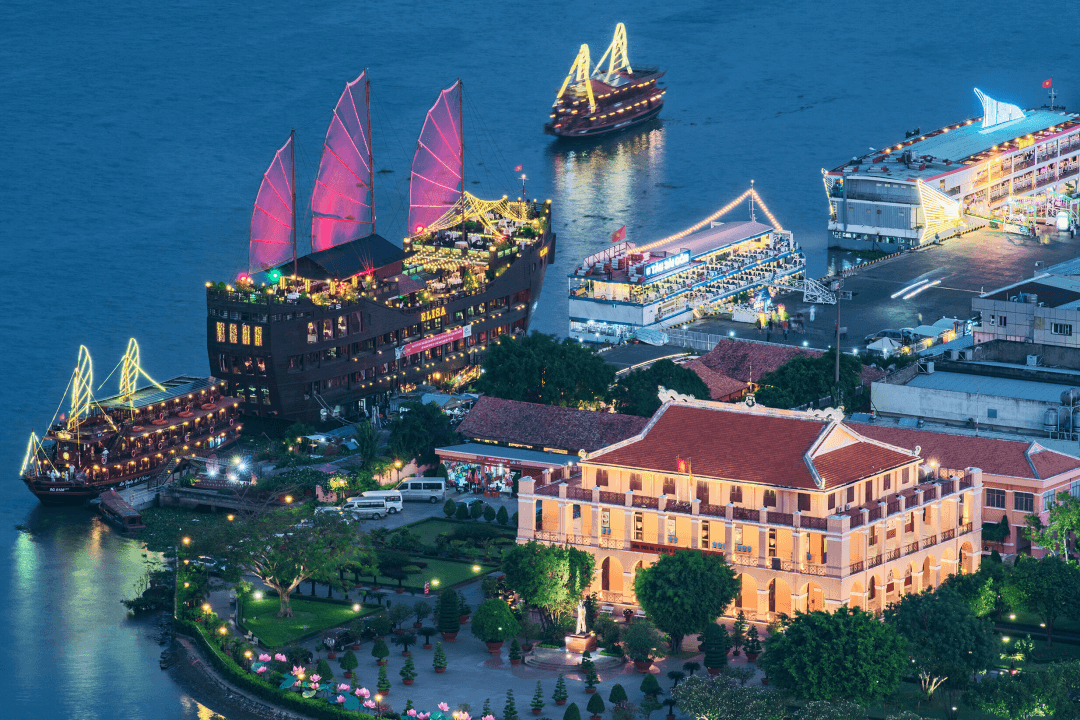
The Saigon River, which runs through the city, is a vital artery that has always played a crucial role in the development of the city. Today, it is lined with chic restaurants, bars, and luxurious residential complexes. A river cruise offers stunning views of the city’s skyline, a fascinating mix of past and present.
The Energy of a City on the Move
Ho Chi Minh City is known for its boundless energy. The streets are bustling day and night, with incessant scooter and motorcycle traffic. Street markets, such as Bến Thành, are a real spectacle of colors and flavors, where you can taste local delicacies and buy handicrafts. The city is also a vibrant cultural center, with many museums, theaters, and art galleries showcasing the richness of Vietnamese culture.
An emerging technology hub
At the same time, Ho Chi Minh City is positioning itself as a technology and innovation hub in Southeast Asia. Start-ups are flourishing, attracting international investors and talent. Coworking spaces, incubators and tech events are multiplying, testifying to the entrepreneurial spirit that drives the city.
A harmonious balance
What makes Hanoi and Ho Chi Minh City so captivating is their ability to balance tradition and modernity. Both cities honor their heritage while embracing the future with enthusiasm. This duality is reflected in the architecture, culture and daily life of the inhabitants.
Vietnamese Hospitality
The people of Hanoi and Ho Chi Minh City are renowned for their hospitality and kindness. Visitors are always greeted with a smile, and locals are often delighted to share their stories and traditions. This human warmth helps to make the travel experience in Vietnam particularly memorable.
Gastronomy: a culinary journey
Vietnamese cuisine is another major asset that appeals to tourists and expatriates. Each region has its specialties, and both Hanoi and Ho Chi Minh City offer a palette of unique flavors. In Hanoi, you can enjoy the famous pho, a fragrant noodle soup, or crispy spring rolls. Ho Chi Minh City, on the other hand, is known for its spicy dishes and varied culinary influences. The night markets are a real invitation to taste discovery, where each stall offers delicacies to taste.
Green Spaces: Havens of Peace
Despite their rapid development, Hanoi and Ho Chi Minh City have not sacrificed their green spaces. Parks and gardens are plentiful, offering havens of peace in the heart of the urban hustle and bustle. In Hanoi, Lenin Park and the Botanical Garden are popular places to relax for locals. Ho Chi Minh City, with its Tao Đàn Park and the Saigon Botanical Garden, also offers quiet spaces where one can escape the hustle and bustle of the city.
Attractiveness for Expatriates
Affordable Cost of Living
One of the reasons why many expats choose to move to Vietnam is the relatively low cost of living compared to other major Asian cities. Whether it’s for housing, food, or leisure, Vietnam offers an exceptional quality of life at an affordable price. Expats can enjoy modern comforts while experiencing a rich and diverse culture.
Professional opportunities
The economic dynamism of Hanoi and Ho Chi Minh City creates many professional opportunities, especially in the technology, education and tourism sectors. Local and international companies are actively recruiting, and expats can find challenging positions in a growing environment.
A Lively Social and Cultural Life
The social and cultural life is also a major asset for expats. Both cities offer a wealth of activities and events throughout the year. Festivals, concerts, exhibitions and theme nights allow you to meet people and immerse yourself in the local culture. Clubs and associations for expatriates are also numerous, facilitating integration and intercultural exchanges.
Conclusion: A Vietnam in full evolution
Hanoi and Ho Chi Minh City are the perfect embodiment of Vietnam’s changing world, where past and present come together to create a unique and fascinating reality. These cities, in perpetual metamorphosis, offer tourists and expatriates an enriching and unforgettable experience. Between the historical relics, the modern skyscrapers, the cultural richness and the hospitality of the locals, Vietnam is a destination that leaves no one indifferent.
Whether you are looking for adventure, cultural discoveries or professional opportunities, Hanoi and Ho Chi Minh City will seduce you and welcome you with open arms. Come and explore this multifaceted country, where history and modernity meet to write the chapters of a promising future. Contact us to organize your trip to Vietnam!


